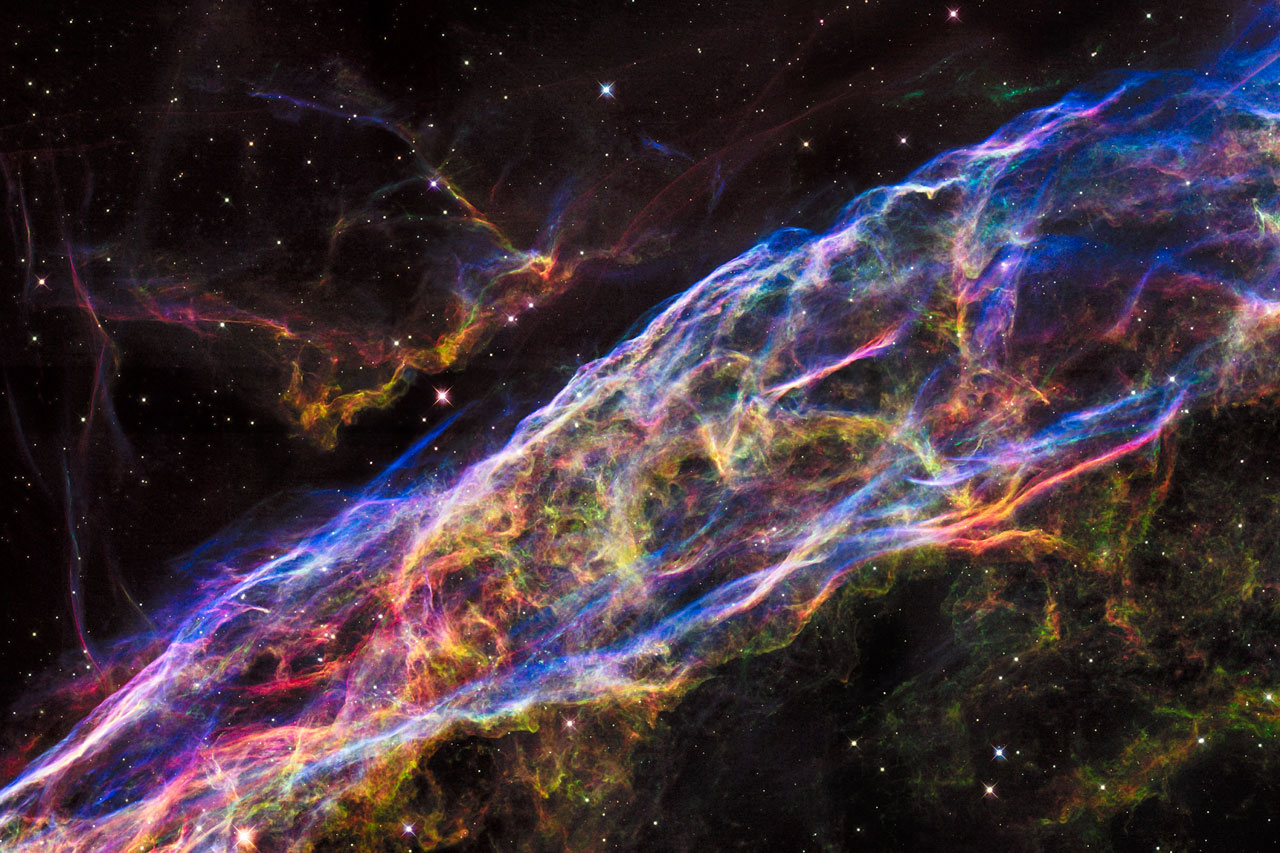
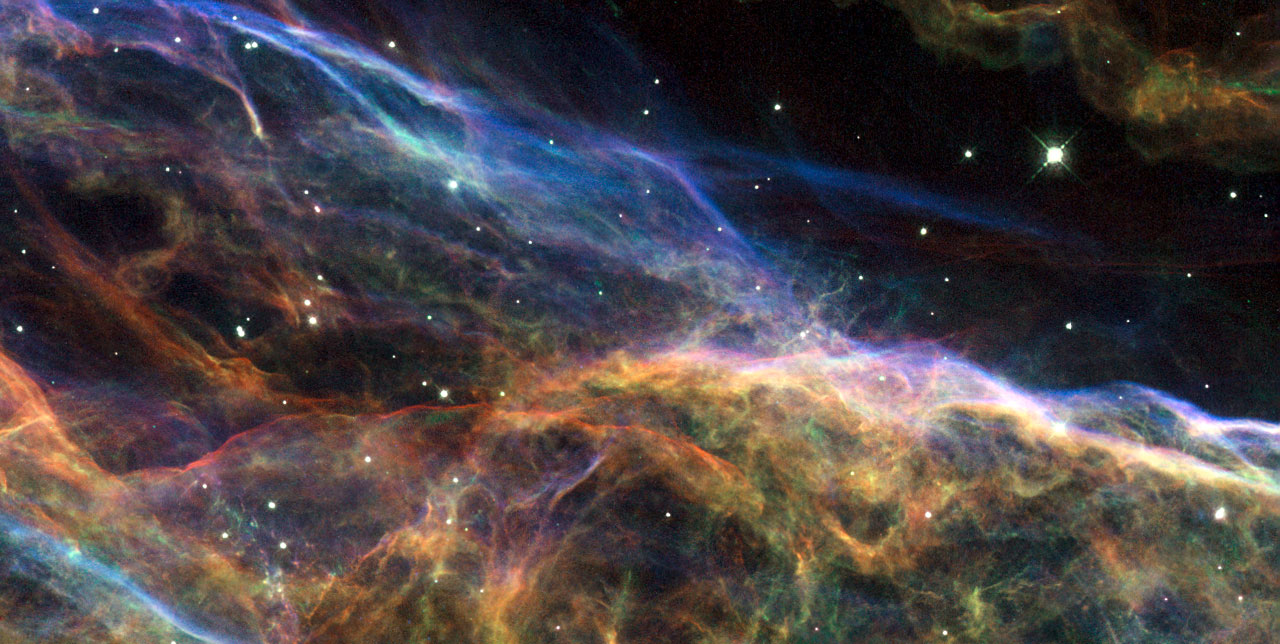
This image shows a small section of the Veil Nebula, as it was observed by the NASA/ESA Hubble Space Telescope. This section of the outer shell of the famous supernova remnant is in a region known as NGC 6960 or — more colloquially — the Witch’s Broom Nebula.
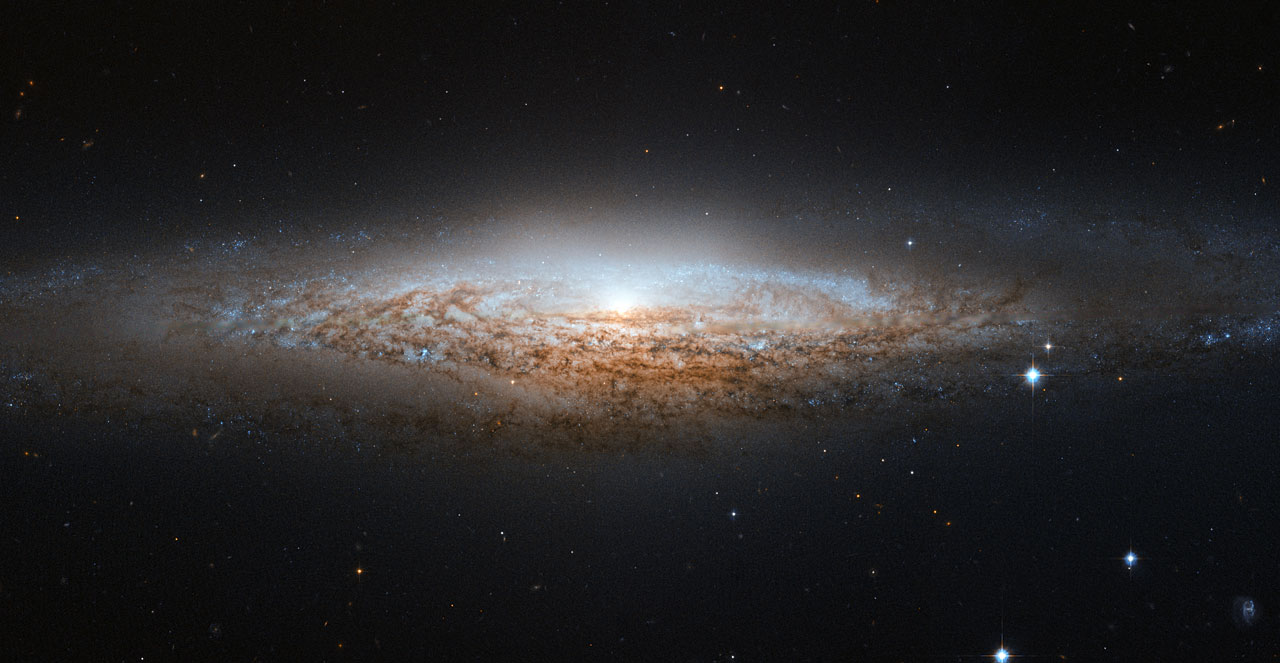
Galaxie von der Seite!
This image shows a small portion of the Veil Nebula – the shattered remains of a supernova that exploded some 5-10,000 years ago. The intertwined rope-like filaments of gas result from the enormous amounts of energy released as the fast-moving debris from the explosion ploughs into its surroundings and creates shock fronts. These shocks, driven by debris moving at 600,000 kilometres per hour, heat the gas to millions of degrees. It is the subsequent cooling of this material that produces the brilliantly coloured glows. This portion of the Veil Nebula is located in a magnificent part of the Veil known as the Witch’s Broom Nebula to the east (to the right in the overview image). The entire structure spans about 3 degrees, corresponding to about 6 full moons. The bright blue star – dubbed 52 Cygni and unrelated to the supernova explosion – can be observed with the naked eye on a clear summer’s night. The image was taken with the Wide Field and Planetary Camera 2 (WFPC2) on board the Hubble Space Telescope. The colour is produced by composite of three different images. The different colours indicate emission from different kinds of atoms excited by the shock: blue shows oxygen, green shows sulphur, and red shows hydrogen.
Irgend ein Nebel in den Weiten des Universums!
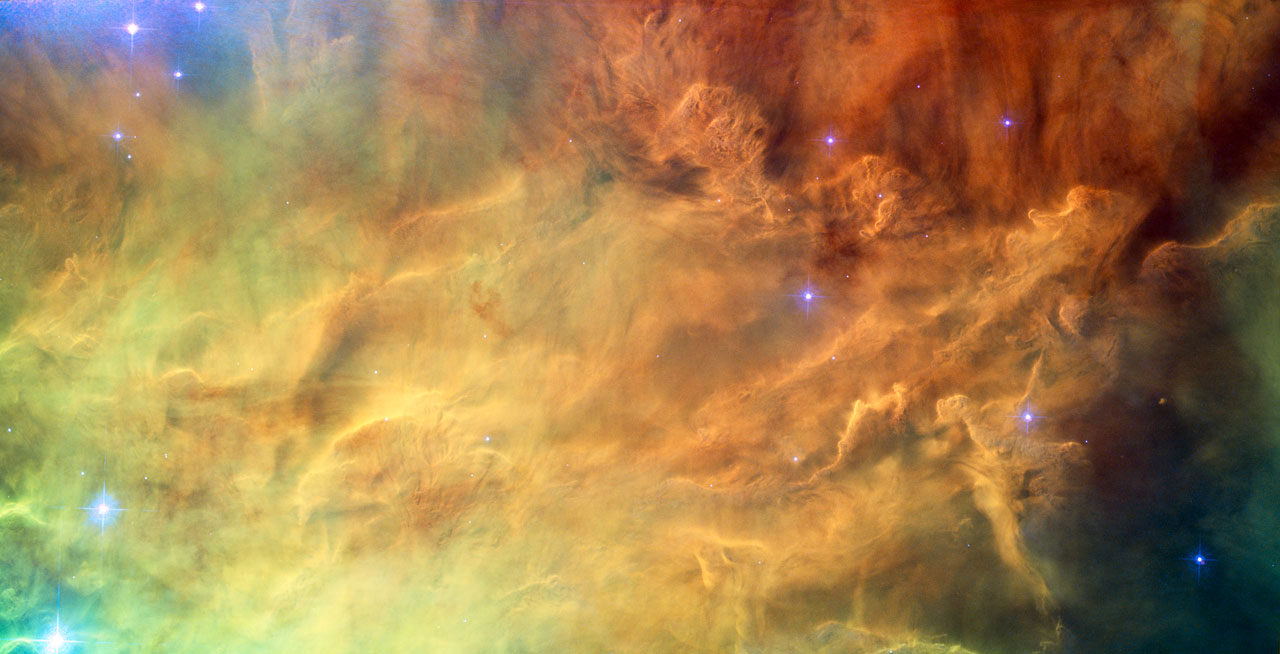
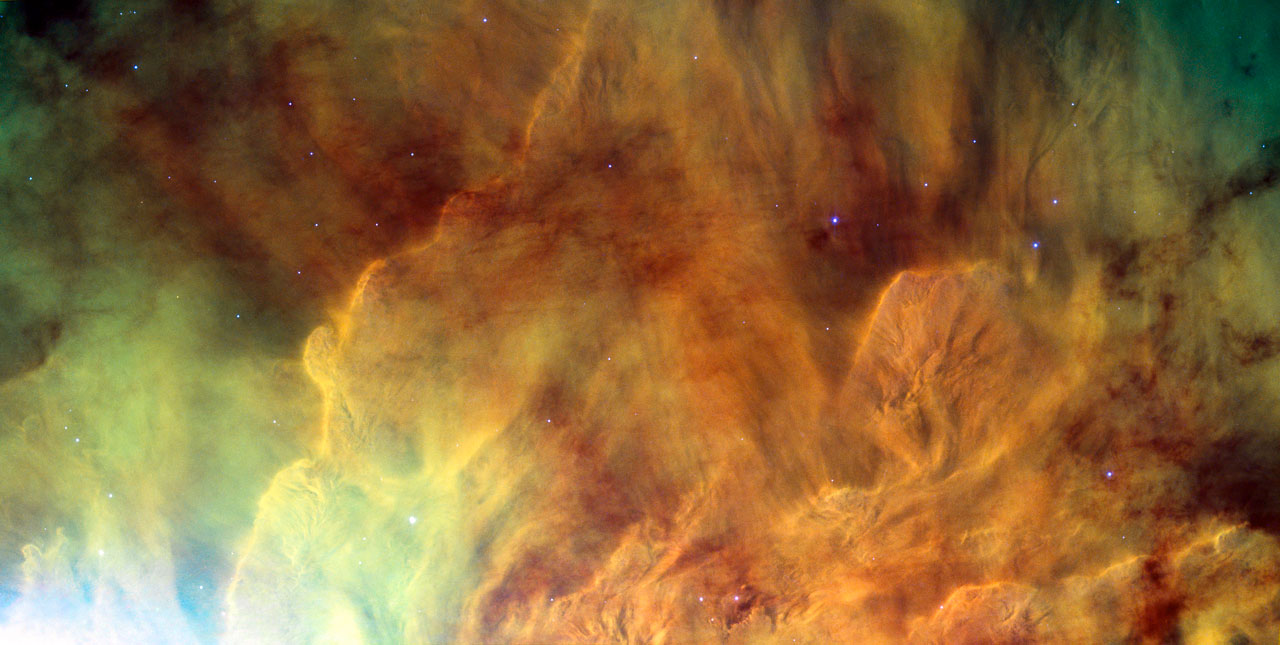
This close-up shot of the centre of the Lagoon Nebula (Messier 8) clearly shows the delicate structures formed when the powerful radiation of young stars interacts with the hydrogen cloud they formed from. This image was created from exposures taken with the Wide Field Channel of the Advanced Camera for Surveys on Hubble. Light from glowing hydrogen (through the F658N filter) is coloured red. Light from ionised nitrogen (through the F660N filter) is coloured green and light through a yellow filter (F550M) is coloured blue. The exposure times through each filter are 1560 s, 1600 s and 400 s respectively. The blue-white flare at the upper-left of the image is scattered light from a bright star just outside the field of view. The field of view is about 3.3 by 1.7 arcminutes.
Noch irgend ein Nebel in den Weiten des Universums!
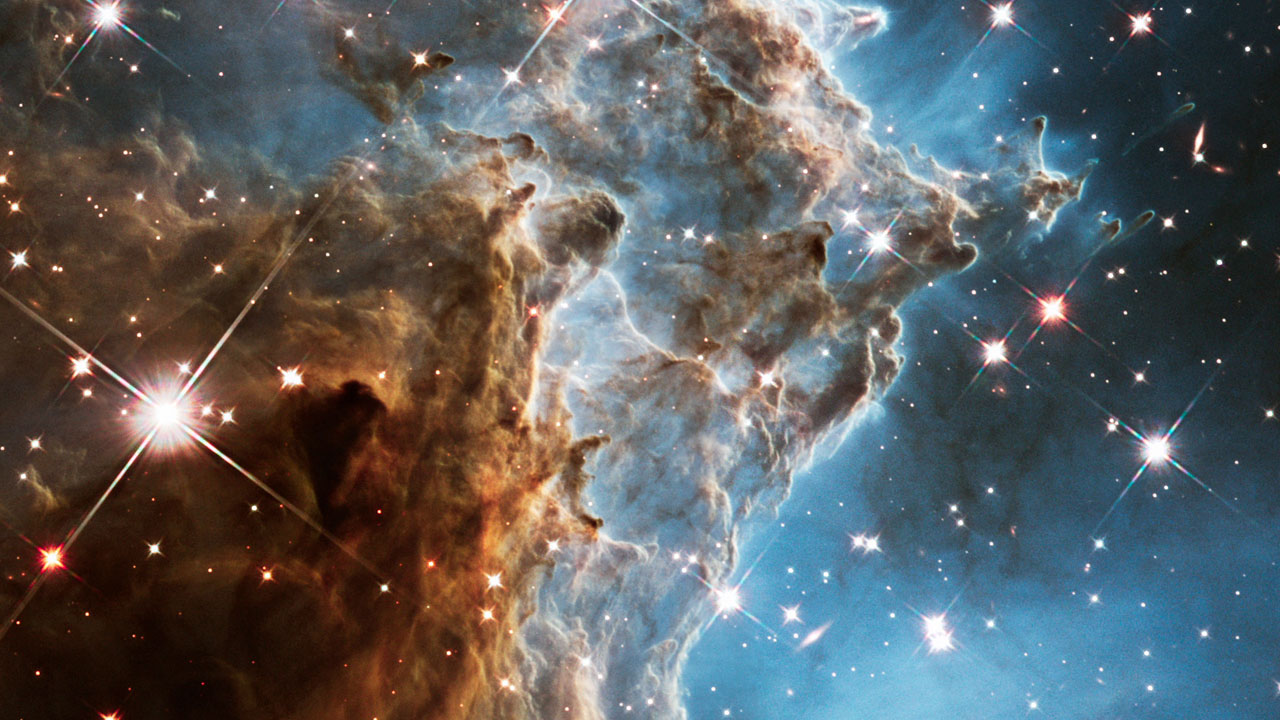
Screenshot of Hubblecast 73: Hubble revisits the Monkey Head Nebula for 24th birthday snap
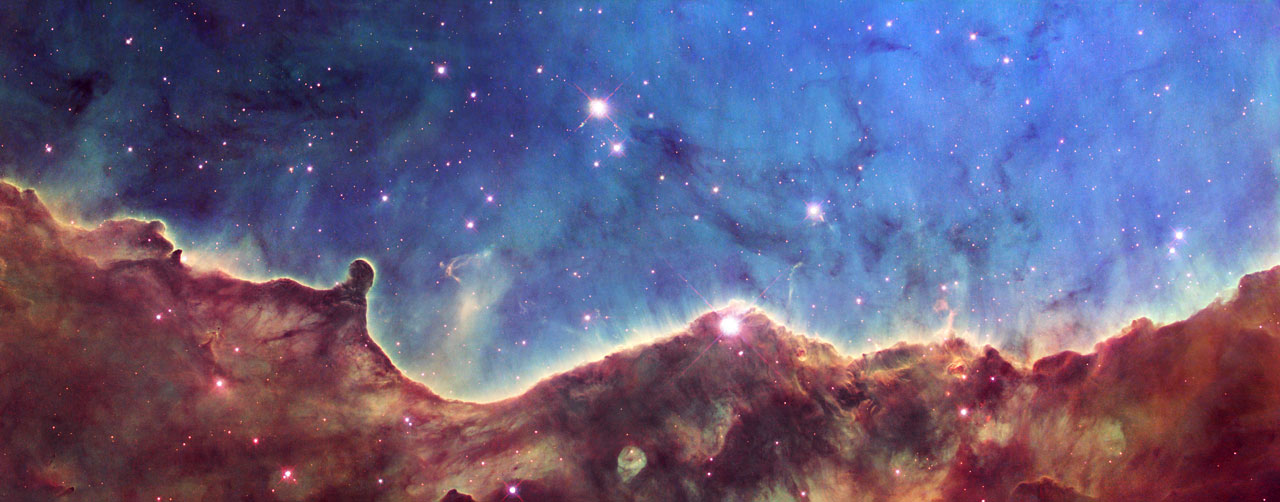
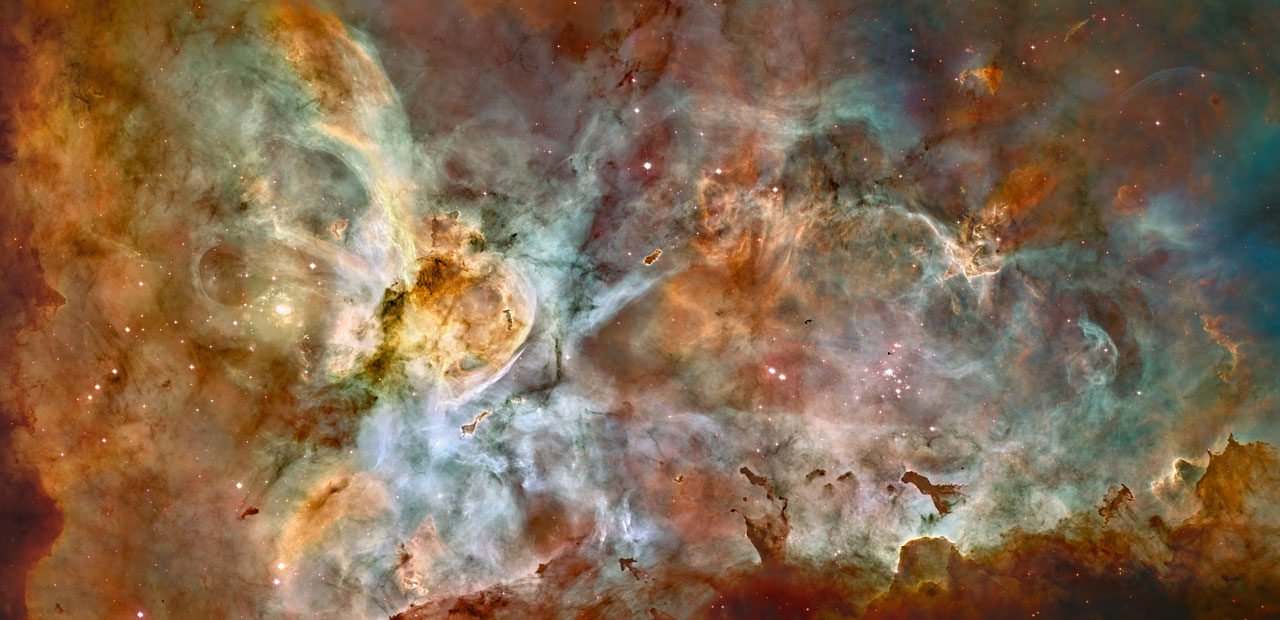
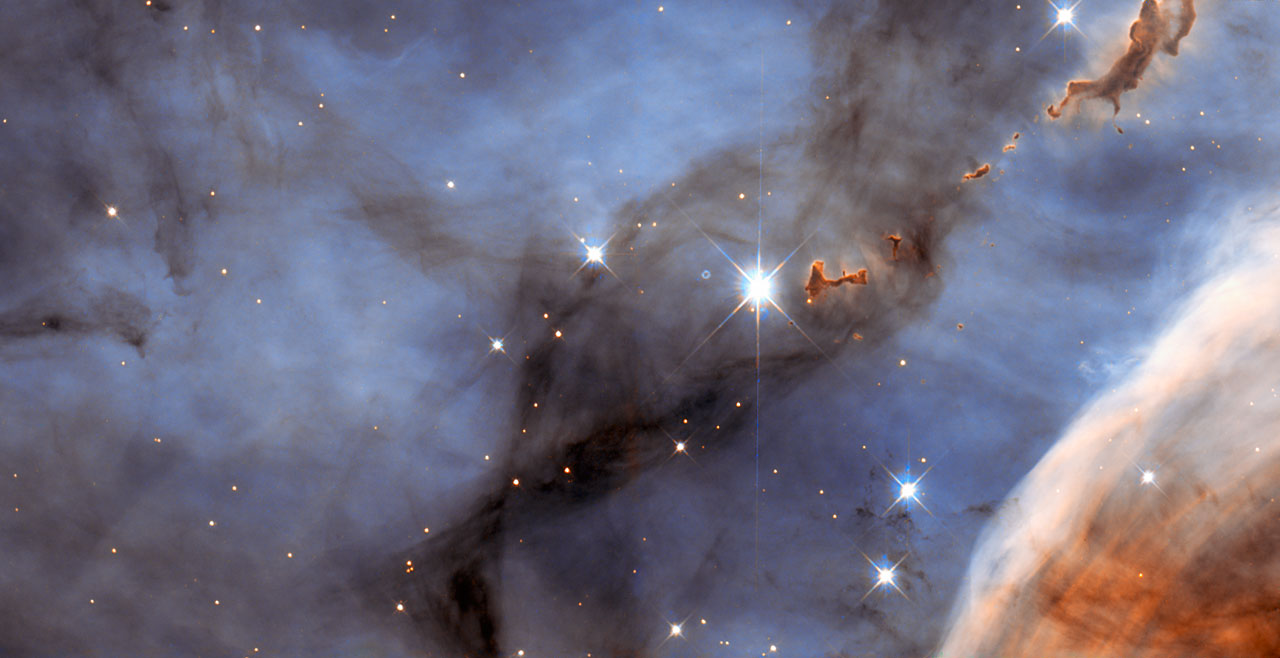
Looking like an elegant abstract art piece painted by talented hands, this picture is actually a NASA/ESA Hubble Space Telescope image of a small section of the Carina Nebula. Part of this huge nebula was documented in the well-known Mystic Mountain picture (heic1007a) and this picture takes an even closer look at another piece of this bizarre astronomical landscape (heic0707a). The Carina Nebula itself is a star-forming region about 7500 light-years from Earth in the southern constellation of Carina (The Keel: part of Jason’s ship the Argo). Infant stars blaze with a ferocity so severe that the radiation emitted carves away at the surrounding gas, sculpting it into strange structures. The dust clumps towards the upper right of the image, looking like ink dropped into milk, were formed in this way. It has been suggested that they are cocoons for newly forming stars. The Carina Nebula is mostly made from hydrogen, but there are other elements present, such as oxygen and sulphur. This provides evidence that the nebula is at least partly formed from the remnants of earlier generations of stars where most elements heavier than helium were synthesised. The brightest stars in the image are not actually part of the Carina Nebula. They are much closer to us, essentially being the foreground to the Carina Nebula’s background. This picture was created from images taken with Hubble’s Wide Field Planetary Camera 2. Images through a blue filter (F450W) were coloured blue and images through a yellow/orange filter (F606W) were coloured red. The field of view is 2.4 by 1.3 arcminutes.
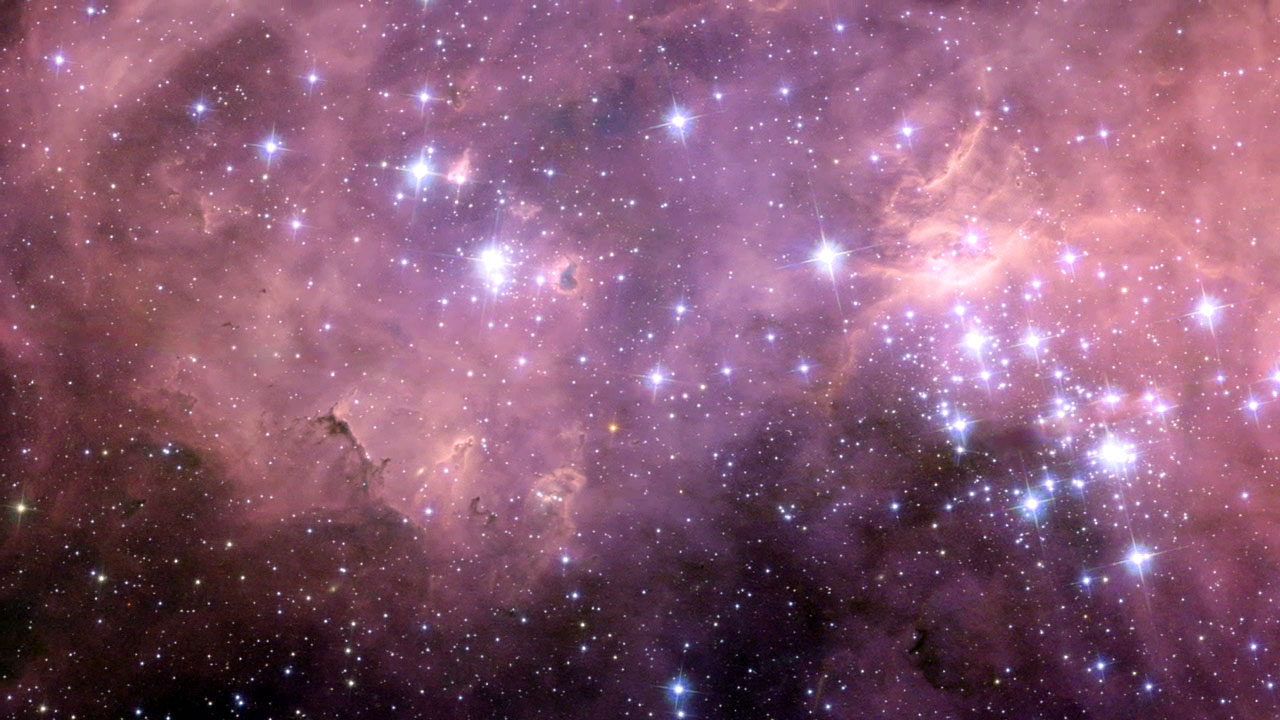
Like a Dali masterpiece, this image of Messier 8 from the NASA/ESA Hubble Space Telescope is both intensely colourful and distinctly surreal. Located in the constellation of Sagittarius (The Archer), this giant cloud of glowing interstellar gas is a stellar nursery that is also known as the Lagoon Nebula. Although the name definitely suits the beauty of this object, “lagoon” does suggest tranquillity and there is nothing placid about the high-energy radiation causing these intricate clouds to glow. The massive stars hiding within the heart of the nebula give off enormous amounts of ultraviolet radiation, ionising the gas and causing it to shine colourfully, as well as sculpting the surrounding nebula into strange shapes. The result is an object around four to five thousand light-years away which, on a clear night, is faintly visible to the naked eye. Since it was first recorded back in the 1747 this object has been photographed and analysed at many different wavelengths. By using infrared detectors it is possible to delve into the centre of these dusty regions to study the objects within. However, while this optical image, taken with the Advanced Camera for Surveys (ACS) on the Hubble Space Telescope, cannot pierce the obscuring matter it is undoubtedly one of the most visually impressive. Messier 8 is an enormous structure — around 140 by 60 light-years in extent — to put this in perspective the orbit of Neptune stretches only about four light-hours from our own Sun. This image depicts a small region in the centre of the nebula, while the region adjacent to the Lagoon Nebula, from the same Hubble observations, can be seen here. This picture was created from exposures taken with the Wide Field Channel of the Advanced Camera for Surveys on Hubble. Light from glowing hydrogen (through the F658N filter) is coloured red. Light from ionised nitrogen (through the F660N filter) is coloured green and light through a yellow filter (F550M) is coloured blue. The exposure times through each filter are 1560 s, 1600 s and 400 s respectively. The blue-white flare at the lower left of the image is scattered light from a bright star just outside the field of view. The field of view is about 3.3 by 1.7 arcminutes.This image is a screen shot from Hubblecast 37 featuring a spectacular new NASA/ESA Hubble Space Telescope image — one of the largest ever released of a star-forming region. It highlights N11, part of a complex network of gas clouds and star clusters within our neighbouring galaxy, the Large Magellanic Cloud. This region of energetic star formation is one of the most active in the nearby Universe. Read more about it in the press release heic1011.